How much should your Singapore SME budget for IT in 2027?

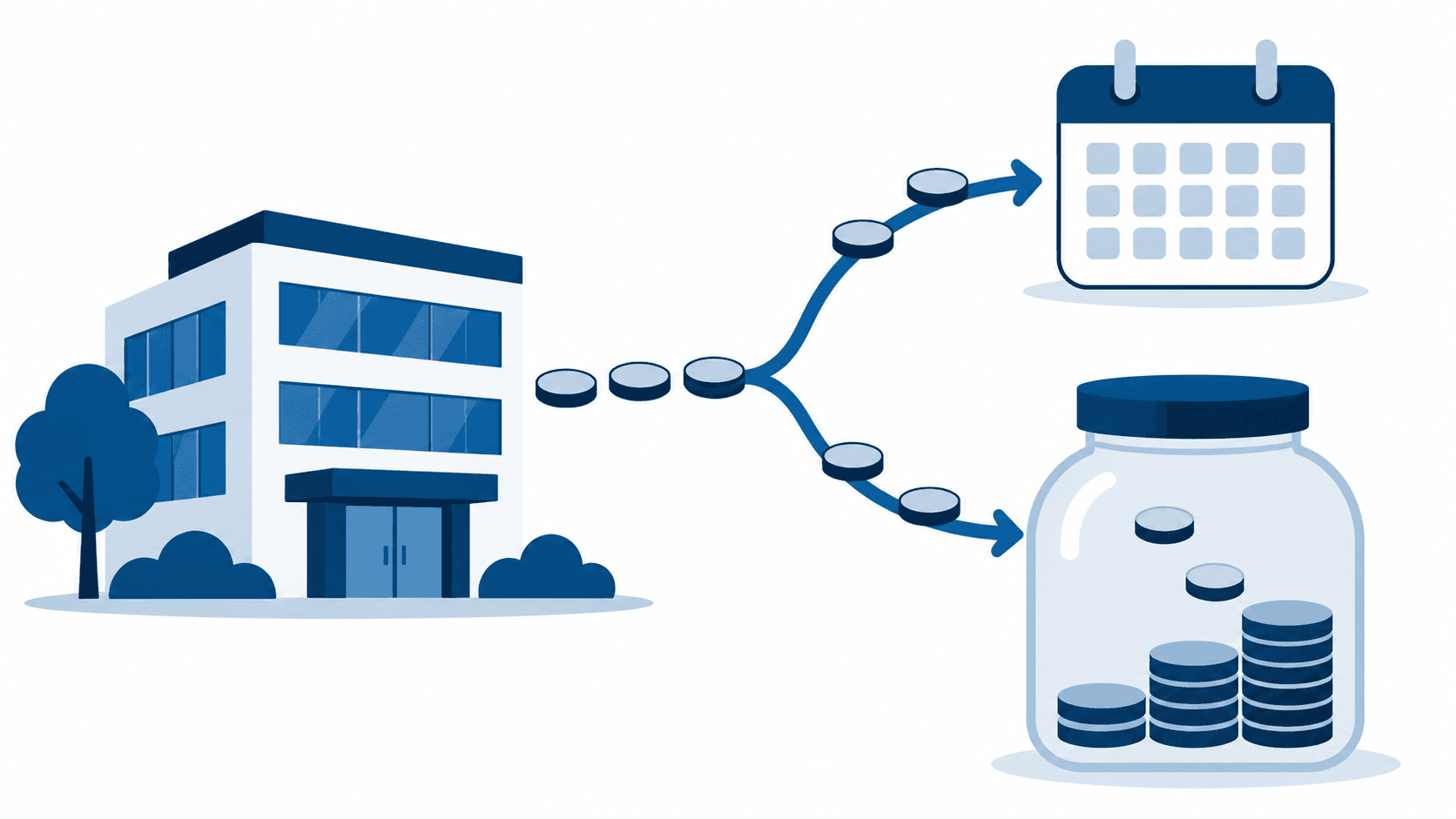
For most Singapore SMEs, a workable 2027 IT budget is best built from line items rather than a percentage. For a 30-person firm turning over S$3 million, our worked example below comes to roughly S$5,800 to 13,000 a month once you count licences, hardware, backup, insurance and training alongside the support contract. That is about 2.3% to 5.2% of revenue. Most of the spread is the support contract, taken here at the S$100 to 300 per user a month that one 2026 vendor round-up (Kaopiz) cites as the Singapore average. Deloitte's 2026 study of 662 senior technology leaders puts the average technology budget at about 6% of revenue, heading for 8% within two years, but those respondents run companies far larger than yours. The useful move is to build the budget from line items rather than a percentage, and to separate what you pay every month from what you set aside for the years you replace things.
The benchmarks, and why they overstate your number
Two sources get quoted whenever an owner asks this question, and both lean towards big companies. Deloitte's 2026 Global Technology Leadership Study surveyed 662 senior technology leaders between December 2025 and February 2026, 87% of them C-suite, and found technology budgets averaging around 6% of revenue and expected to reach about 8% in two years. The Avasant IT Spending and Staffing Benchmarks for 2025/2026 define a "small" organisation as one with an IT budget under US$10 million and exclude any respondent below US$50 million in revenue. Neither sample contains a 30-person firm in Ubi or Tai Seng.
We have not found a published Singapore SME benchmark we would stand behind, so the percentages below are a sanity check on a budget you build line by line.
Self-check: add up everything you paid for IT last year (support contract, software subscriptions, laptops, backup, cyber insurance, any training) and divide by revenue. As a rule of thumb, not a benchmark: if the answer is under 2%, check what might be missing; if it is over 8% and you are not a software or financial firm, check whether something is being paid for twice.
Two pots: the monthly fee and the sinking fund
Anyone who owns a condominium unit in Singapore already understands IT budgeting. Every month you pay a maintenance fee that keeps the lifts serviced, the pool cleaned and the guardhouse staffed. Separately, the management corporation collects a sinking fund contribution for the year the lifts need replacing or the roof needs waterproofing. An estate that budgets only the monthly fee runs smoothly for a decade, then hits residents with a special levy when the lift fails.
Your IT budget has the same two pots. The monthly fee is your support contract, licences, backup and insurance. The sinking fund is the money for laptop replacement, the firewall and switches that wear out, the server or line-of-business system that reaches end of life. Many SME budgets cover the first pot and ignore the second, which is why hardware replacement always feels like an emergency rather than a plan. The rest of this article prices both pots.
The line items owners forget
The support contract is the number everyone remembers. Our 2026 price guide covers it; one 2026 vendor round-up (Kaopiz) puts the Singapore average at S$100 to 300 per user per month. The items below are the ones that go missing from the spreadsheet.
- Licence creep. Microsoft 365 Business Premium lists at US$22 per user per month (annual commitment, before GST) in Microsoft's licensing notice of 16 February 2026, about S$29 at roughly S$1.30 to the US dollar. Thirty seats at that list price is about S$860 a month (a reseller's quote can differ) before you add the accounting system, the CRM and the design tools. Seats still assigned to staff who have left are a common source of waste.
- Hardware refresh. One Singapore reseller's listing for the ThinkPad E14 Gen 8 (BitLoop, read 18 November 2026) runs from roughly S$1,960 to 2,460 including GST. At those prices 30 laptops come to S$58,800 to 73,800, so a four-year cycle costs roughly S$14,700 to 18,450 a year, or about S$1,225 to 1,540 a month, before you add firewalls, switches and Wi-Fi.
- Cyber insurance. DBS and Chubb's published SME table puts S$500,000 to S$2 million of cover at S$870 to S$2,950 a year across its revenue bands (up to S$10 million), and one broker told The Straits Times on 14 September 2026 that S$250,000 of cover for firms with revenue below S$2 million starts from S$1,000 a year. Premiums depend on your risk profile, so ask a licensed broker for a quote. Our cyber insurance guide covers what insurers now demand before they will pay a claim.
- Backup for cloud email and files. By default Microsoft keeps a deleted user's mailbox for 30 days and their OneDrive for 30 days plus a further 93 days in a site recycle bin (Microsoft Learn, read 18 November 2026). That is months, not years. Third-party Microsoft 365 backup lists at roughly US$2.60 to 7 per user per month as at November 2026 (Veeam Data Cloud's tiers run from US$2.63 to US$7.00, Afi is US$3 and CrashPlan is US$44 a year). That is about S$3.40 to 9.10 per user at S$1.30 to the US dollar, or roughly S$100 to 270 a month for 30 users.
- Training. One short phishing and AI-hygiene session a year. Check whether any of it counts under the redesigned SkillsFuture Enterprise Credit, which launches on 1 December 2026 for eligible companies and supported programmes only. It is small money and it is the line that gets cut first.
- One-off certification. A first Cyber Essentials mark, where CSA deducts S$250 to 650 from the certification fee, depending on the number of endpoints, until 6 February 2028 (csa.gov.sg, read 18 November 2026). See our Cyber Essentials guide.
- The AI line. New for 2027 and covered below. It belongs in the budget, and it should be smaller than the vendors tell you.
A worked example: 30 people, S$3 million revenue
Here is the budget we would sketch for a 30-person professional services or trading firm with S$3 million in revenue, no server room and staff on laptops. Each figure is a list price, a reseller listing, an insurer's published table, one vendor round-up's market average or our own planning estimate, as named in the section above. None is a quote.
- Managed IT support (patching, monitoring, helpdesk, security tooling): one 2026 vendor round-up (Kaopiz) puts the Singapore average at S$100 to 300 per user a month, which is S$3,000 to 9,000 a month for 30 users. Our own EverCare plans start from S$119 per user per month, which is from S$3,570 a month for 30 users. Few Singapore IT providers publish their prices, so get yours quoted in writing.
- Microsoft 365 Business Premium for 30 users: about S$860 a month at Microsoft's list price of US$22 a seat (about S$29), before GST; a reseller's quote can differ.
- Cloud backup for Microsoft 365: about S$100 to 270 a month for 30 users (30 × S$3.40 to 9.10, the third-party list prices above).
- Hardware sinking fund (30 laptops on a four-year cycle at the listing prices above): about S$1,225 to 1,540 a month set aside, whether or not you spend it this year. Network kit is extra.
- Cyber insurance: about S$75 to 250 a month, paid annually (S$870 to 2,950 a year in the DBS and Chubb table, divided by 12).
- Training and one-off certification, averaged: S$100 to 200 a month (our suggested planning figure, not a market statistic).
- AI pilot line: S$5,000 to 10,000 for the year, or about S$420 to 830 a month (our suggested planning figure, not a market statistic).
What it costs a 30-person Singapore company: roughly S$5,800 to 13,000 a month. The low end takes the bottom of each range above and the high end the top, with Microsoft 365 at Microsoft's list price in both: S$3,000 + 860 + 100 + 1,225 + 75 + 100 + 420 = S$5,780, and S$9,000 + 860 + 270 + 1,540 + 250 + 200 + 830 = S$12,950. That is about S$69,000 to 155,000 a year, or 2.3% to 5.2% of S$3 million revenue, before your industry-specific software. Most of the spread is the support line, which rests on one vendor round-up's average, so swap in your own quote. It is a starting point built on the sources named above and on our own planning figures for training and the AI pilot, not a quote. For comparison, an in-house IT manager at the median starting salary on Robert Half Singapore's 2026 salary pages, S$160,000 a year, costs about S$14,700 a month (S$13,333 salary, S$1,360 employer CPF at the rate for a Singapore citizen or permanent resident aged 55 or below, and S$11.25 Skills Development Levy), before bonus, recruitment, equipment, training and cover for leave, and our downtime napkin maths puts an outage for a firm this size at around S$1,700 an hour.

What to cut and what never to cut
Budget season invites across-the-board trims. IT does not respond well to that, because some lines are elastic and some are the floor you stand on.
Cut without regret:
- Licences for people who have left, and premium tiers nobody uses. Ask your provider for a seat-by-seat list.
- Duplicate tools: two file-sharing services, two video-call platforms, a chat tool nobody opened since 2024.
- High-spec laptops for everyone. Usually only a minority of staff need the expensive configuration; the rest need a reliable standard model.
- The top support tier, if your business is stable, your systems are simple and a four-hour response is genuinely fine for you.
Never cut:
- Backup that is tested, including for cloud email and files.
- Patching, endpoint protection and multi-factor authentication. These are basic controls that cyber insurance questionnaires commonly ask about.
- The hardware sinking fund. Skipping a year of contributions feels free until the levy arrives.
- Cyber insurance, if you already have it. Dropping it quietly to save the premium should be a deliberate director-level decision.
- The annual staff session. It costs little, and it covers the scam emails aimed at whoever approves your payments.
Ask: of the items in my IT budget, which three would an attacker or an insurer notice if they disappeared? Those stay, whatever else moves.
The AI line: pilot money, not a platform purchase
Every vendor pitching you in 2027 will have an AI tier. Deloitte's same 2026 study found that 89% of technology leaders allocate no more than a quarter of their technology budget to AI, and those respondents work at organisations with revenue of US$1 billion or more. For a 30-person company, our suggested planning figure, which is not a market statistic, is a line of S$5,000 to 10,000 for the year, framed as pilot money: a handful of paid seats on one assistant, one small workflow automated end to end, and someone accountable for whether it worked.
Think of it as a test drive rather than buying the car. You find out which three tasks in your business actually benefit, what your staff do with it unsupervised, and what data you accidentally exposed, all before committing to a per-user platform fee for 30 people. If the pilot pays for itself, next year's budget line grows with evidence behind it. If it does not, you spent the price of a few laptops learning that. Our VCAIO service exists for owners who want that pilot run with governance and a roadmap rather than enthusiasm alone.
Who can hold the budget flat
Some firms genuinely do not need more money in 2027. If you have ten stable staff, laptops bought in the last two years, Microsoft 365 already right-sized, a provider who patches and backs up on schedule and no plans to add headcount or move premises, hold it flat. Keep the sinking fund contributions going and spend the budget cycle checking licences rather than adding them.
The opposite is true if you are growing past 30 staff, if a regulator or large customer has started sending security questionnaires, if your laptops are clustered around 2021 and 2022 and all due at once, or if your provider's contract still describes the business you ran three years ago. Those firms usually need to move from the bottom of the worked example's range to the middle, and the increase is almost always the sinking fund, not the monthly fee.
Send this to your IT provider
Owners delegate; they do not build spreadsheets at 11pm. Copy this to whoever looks after your IT and ask for a written reply.
Hi, I am putting together our 2027 IT budget and want it built from line items, not last year plus 5%. Please send me, by line: (1) our monthly support fee and what it covers; (2) a seat-by-seat list of every software licence we pay for, with any seats that can be removed; (3) the age of every laptop and network device, and which ones you expect to replace in 2027 with an estimated cost; (4) what we pay for backup, what it covers and when it was last test-restored; (5) our cyber insurance renewal date and premium; (6) a recommended training line; and (7) a proposed AI pilot budget capped at S$10,000 for the year (a planning figure, not a market statistic), with the one workflow you would try first. Please mark anything you think we can cut.
Frequently asked questions
Is 3% of revenue too little for a 30-person firm?
Not if it buys tested backup, patching, endpoint protection, multi-factor authentication and a refresh fund. Our worked example runs from about 2.3% to 5.2% of S$3 million and covers all of that. The percentage matters less than whether the floor items are present.
Should hardware be a monthly budget line if we only buy laptops every few years?
Yes. Set aside the money monthly even if the purchase is lumpy, exactly as a condominium collects sinking fund contributions every month for a lift it replaces, say, once in fifteen years. Leasing laptops is the other honest option; it converts the sinking fund into a monthly fee at a premium.
Can a government grant cover any of this?
None of the schemes we checked on 18 November 2026 (the EDGE Grant, CSA's Cyber Essentials funding and CISO-as-a-Service) funds IT support, managed services or a helpdesk retainer. Check current terms on GoBusiness before relying on this. The EDGE Grant, which replaced PSG on 30 September 2026, offers SMEs up to 50% support on digitalisation activities such as pre-approved digital solutions and pre-scoped equipment, and CSA deducts S$250 to 650 from a first Cyber Essentials certification. Plan the monthly pot as a pure operating cost.
Our provider wants to raise the monthly fee for 2027. Is that reasonable?
Software and security tooling list prices have been rising, so a single-digit increase with a line-by-line explanation is normal. A rise without a line-by-line reason, or one that arrives with a new three-year lock-in, deserves a second quote. Our price guide covers what to compare a quote against.
We have no IT budget at all today. Where do we start?
Start with the floor: backup, patching, endpoint protection, multi-factor authentication and a laptop inventory. Price those first, then add the support contract that keeps them running. Everything else, including the AI line, waits until that floor exists.
Our approach
Evernet Systems, a Singapore managed IT services provider, has an obvious bias here: we sell the monthly fee. So here is the honest line. We tell roughly four in ten owners "not yet". Often the honest answer is to spend the same money on different things, for example moving money from unused licences into the refresh fund and a backup that has actually been tested. We price on fixed monthly fees and offer both no-lock-in and fixed-term agreements; the term and what can change during it are set out in the proposal.
If you would like a second pair of eyes on your 2027 numbers, book a discovery call. You will get a straight answer, even if it is "your current provider and budget are fine".

Steven Shi · Founder & Technical Director
Steven is the founder and Technical Director of Evernet Systems, a Singapore-headquartered managed services provider serving 70+ SMEs. He leads Evernet's move from traditional MSP to AI adoption partner. The company tested AI on its own operations first: about 40% automated by 2026. It now helps clients adopt AI the same way. He writes about practical AI adoption, IT infrastructure and PDPA compliance for growing businesses.
Need help with this?
We help Singapore SMEs put these ideas into practice. Book a free 30-minute discovery call.
Book a callRelated articles
Keep your IT person or hire an MSP? Why the answer is often both
With one IT person and 50 or more staff, keeping them or replacing them is a false choice. Co-managed IT keeps your person for the daily work and adds a provider behind them for monitoring, security, backup and after-hours cover. This guide covers what it means, the three situations it fits and who does what. It also covers how to work out the cost, and how to tell your IT person without losing them.
Read Managed ITHow fast should your IT provider respond and fix problems? SLAs explained for SME owners
A reasonable SLA for a Singapore SME is a 15-minute to 1-hour response and a 4-hour resolution target for a critical outage. Those are two different promises, and many contracts only commit to the first. This guide covers what an SLA is, realistic tiers, why "24/7 support" means nothing without written clocks, and the six lines to ask for in your contract.
Read