Phishing in 2026: training your staff for the deepfake era

Your staff were taught to spot phishing by bad grammar, strange greetings and obvious urgency. Those signs have stopped working. KnowBe4 reported that 82.6% of the phishing emails it analysed between September 2024 and February 2025 showed some use of AI. In a study of 101 people posted in November 2024 by Fred Heiding and co-authors, 54% clicked a link in fully AI-written spear-phishing emails, against 12% for generic phishing. In 2023 McAfee's researchers cloned a voice at an estimated 85% match from three to four seconds of audio. In early 2024 a finance employee at engineering firm Arup's Hong Kong office sent about US$25.6 million after a video call where, Hong Kong police said, the "CFO" and colleagues were all deepfakes. What still works is a set of verification habits that hold up even against a perfect fake. Here's how to train for them.
What changed: the scammer no longer has an accent
Old phishing was easy to teach because the forgery was bad, like a con man with a heavy accent claiming to be your cousin. It had spelling errors, odd phrasing and "Dear Valued Customer". AI removed the accent. The email now reads like your supplier wrote it, references your real projects scraped from LinkedIn, and arrives at a plausible moment. The forgeries are now too good for staff to catch them by eye.
The Arup lesson
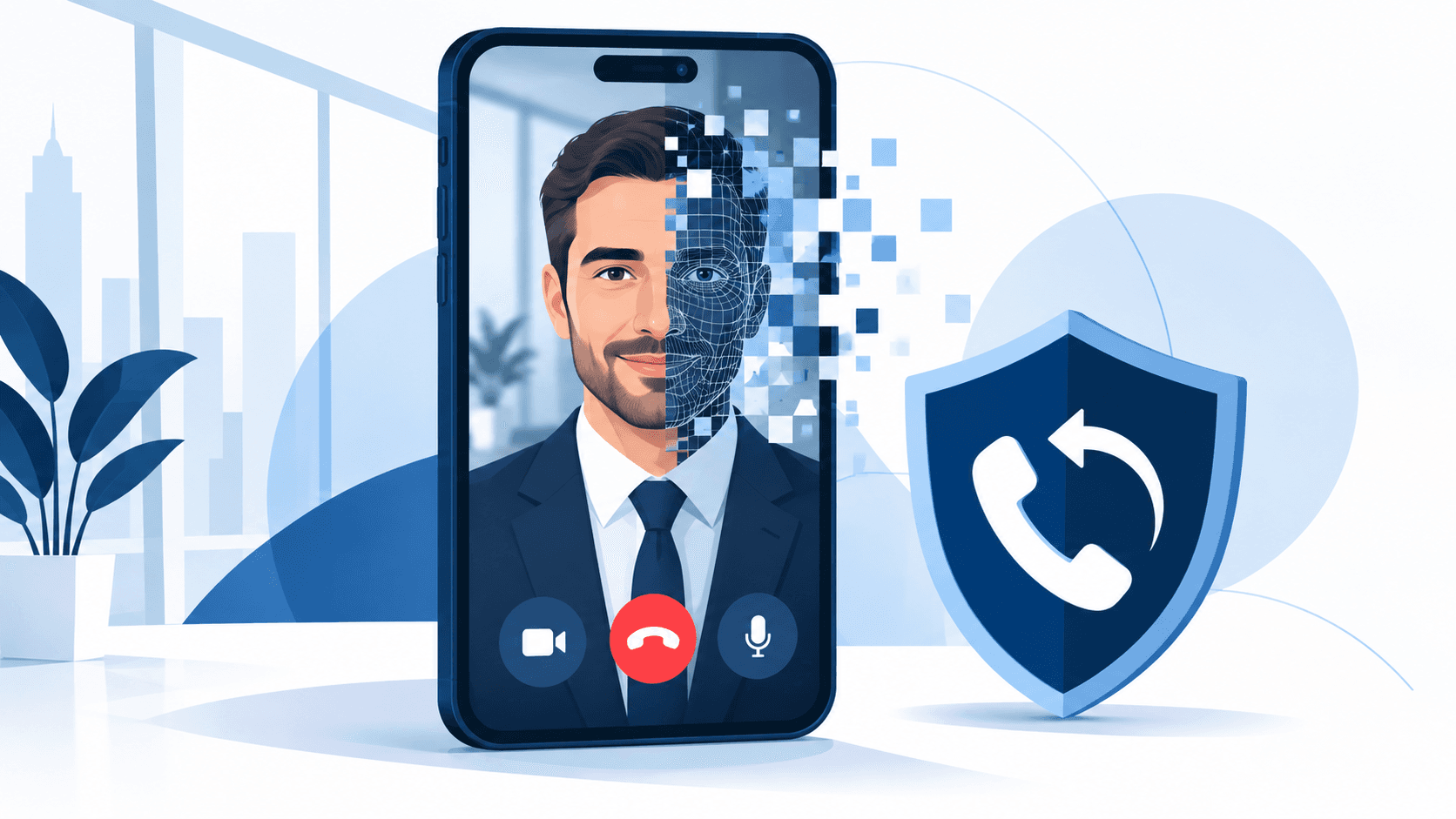
According to Hong Kong police, the finance employee first suspected a phishing email, because it asked for a secret transaction. Then he joined a video call where the CFO and several colleagues looked and sounded real, and the doubt went away. Police said everyone else on that call was a deepfake re-creation, and he sent HK$200 million (about US$25.6 million) across 15 transfers. Arup confirmed in May 2024 that it was the company involved (CNN, 17 May 2024). Nobody on a video call can out-spot a fake that good. The lesson is that seeing and hearing someone is no longer verification.
Five tells that still work, all in behaviour rather than grammar
- Urgency plus secrecy. "Transfer now, tell no one, I'm in a meeting." Real business is rarely both urgent and confidential at once. Fraud almost always is, because together they pressure you past verification.
- Money or credentials, off-script. New bank details, a first-ever gift card request, a login link you didn't ask for. The content of the request is suspicious even when the sender looks perfect.
- Channel switching. An email pushes you to WhatsApp, or a call follows a strange message. Scammers move you to channels with fewer records and fewer colleagues watching.
- Requests to skip process. "Just this once, bypass the PO." Your routine procedures are what the attacker needs removed. Treat a request to skip them as the warning sign.
- First-time anything involving payment. First invoice from a new "supplier", first change of account details, first contact from a "new" staff member of a client. Each of these deserves a phone call.
Three verification rules that beat perfect fakes
- Call back on the number you already have. Use the number in your contacts or on the official website, not the one in the email or the one the caller gives you. This one habit defeats email spoofing, voice cloning and deepfake video at once, because the fraudster controls their own channel but not yours.
- Two people for money movements. Any new payee, changed bank details, or transfer above a threshold you set needs a second approver. Make it policy, so no one can be talked out of it on a call.
- Make verification unpunishable. Say it out loud at a team meeting: "If you delay a payment to verify it, even mine, you will never be criticised." Fraud relies on staff fearing the boss more than the scam. Build a culture where checking is always safe.

Training that changes the numbers
An annual slideshow does little. What works is little and often: short lessons plus realistic simulated phishing, year-round. In KnowBe4's 2025 benchmark of its own customers (14.5 million users, published May 2025), 33.1% of staff clicked a simulated phishing email before any training. After 12 months of ongoing training and simulations the figure was 4.1%. These are a training vendor's figures about its own product, so treat them as an indication. Reporting matters more than not clicking, because one early report lets IT pull the same email out of thirty inboxes.
One rule for running simulations: coach, never punish. The person who clicks and reports it straight away has done the right thing. The one who clicks and says nothing out of fear is how a breach starts.
Frequently asked questions
Can't email filters just catch AI phishing?
Good filtering and sender authentication (SPF, DKIM and DMARC, covered in our plain-English guide) remove a big slice, and you should have them. But AI-written mail from a clean domain gets past filters. That is why the last line of defence is a human habit rather than a product.
Does this apply to WhatsApp and SMS too?
Increasingly, it starts there: a "boss" message from an unknown number, a parcel SMS, a bank alert. The same three verification rules apply: call back on a known number, use two people for money, and make checking safe.
We're a small company. Would anyone deepfake us?
The tooling is automated and cheap, so nobody needs to "choose" you, in the same way that nobody needs to want your data for it to be at risk. A few seconds of the boss's voice from a marketing video can be enough raw material: McAfee's 2023 test needed three to four seconds.
An employee clicked a simulation. What now?
Treat it as a 90-second coaching moment, not a disciplinary one. Show what the tell was, thank them if they reported it, and move on. Punished staff stop reporting, and unreported clicks are how incidents become breaches.
Our approach
Security awareness training and simulated phishing are something a managed IT provider can run for you, and staff awareness training is one of the Cyber Essentials requirements (CSA's certification document, April 2025). Book a discovery call and we'll talk through what a year of little-and-often training looks like for a company your size. You'll get a straight answer even if it's "not yet".

Steven Shi · Founder & Technical Director
Steven is the founder and Technical Director of Evernet Systems, a Singapore-headquartered managed services provider serving 70+ SMEs. He leads Evernet's move from traditional MSP to AI adoption partner. The company tested AI on its own operations first: about 40% automated by 2026. It now helps clients adopt AI the same way. He writes about practical AI adoption, IT infrastructure and PDPA compliance for growing businesses.
Need help with this?
We help Singapore SMEs put these ideas into practice. Book a free 30-minute call.
Book a free 30-minute callRelated articles
You have backups. Could you reopen on Monday? Backup vs business continuity
A backup is a copy of your data. Business continuity is being able to trade on Monday morning. Most SMEs have the first and assume it gives them the second, until the day they try. Here is the difference, explained with a spare tyre, plus the two numbers to agree with your IT provider this week.
Read Industry tipsDo you need cyber security insurance? What it covers, costs and demands for Singapore SMEs
Cyber security insurance (most brokers just say cyber insurance) pays for the bad week after an incident: forensics, recovery, legal advice and notification. But insurers now check your controls before they pay, such as MFA, EDR and tested backups. Here is what one published Singapore SME policy table charges, what it won't cover, and the message to send your broker and IT provider.
Read